Pink Daisy Spray: A Designer's Review for Branded Merch
First Impression: A Floral That Means Business
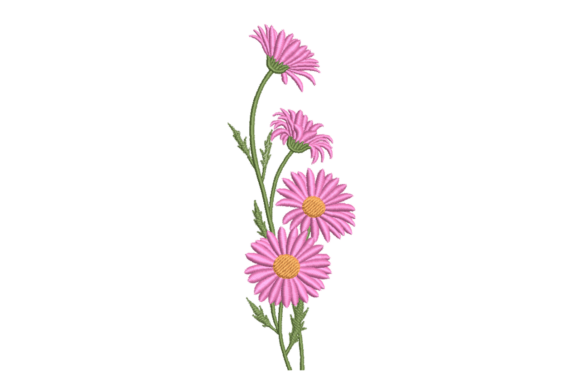
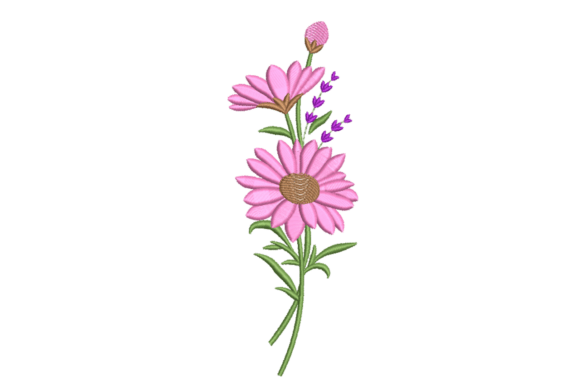
When I first pulled up Pink Daisy Spray, I immediately saw a design that walks the line between soft and structured. This is not an overly fussy floral. It reads as intentional, friendly, and polished. The name alone suggests a gentle, approachable bloom, but the real question for any embroidery designer is whether this Single Flowers Plants category piece can hold its own on finished product across multiple business applications.
I have worked with hundreds of floral embroidery files, and many fall apart when scaled down or stitched on anything other than flat cotton. Pink Daisy Spray feels different. It has a confident shape that could easily become a branded patch, a delicate chest accent, or a recurring motif across an entire small business merchandise line. The visual personality is clean, warm, and quietly professional. It does not scream for attention, but it earns a second look. That is exactly what you want in a machine embroidery design built for commercial use.
Why Small Business Owners Should Pay Attention
If you run a café, boutique, bakery, floral studio, handmade shop, or creative brand, you already know that brand identity lives in the details. A well-placed embroidered mark on an apron, a tote bag, or a cap can communicate more about your business than a dozen social media posts. Pink Daisy Spray offers a specific kind of brand voice. It says we care about craftsmanship without being stiff. It says we are approachable without being casual to a fault.
For Etsy sellers and handmade product creators, the ability to add a consistent embroidered element to your packaging, product labels, or customer gifts is a serious advantage. This design could work as a signature mark. Imagine a small embroidered patch of Pink Daisy Spray sewn onto a linen pouch that holds your handmade candles, or stitched onto the corner of a fabric gift wrap. Suddenly, your packaging becomes part of the product experience. That is the power of a smart embroidery file choice.
Patch Potential and Branded Merchandise Applications
Let us talk about embroidered patch use specifically, because this is where many floral designs either shine or fail. A patch needs clean edges, recognizable shapes, and enough visual weight to read clearly from a short distance. Pink Daisy Spray has a natural spray form that lends itself beautifully to patch construction. The daisy silhouette is universally understood, and the pink palette gives it a distinct personality without limiting it to one industry.
I would confidently recommend this design for:
- Apron embroidery for bakeries, florists, and cafés
- Cap embroidery on the side or back panel for a subtle branded accent
- Tote bag design placement on the lower corner or centered as a hero mark
- Staff uniforms where a chest logo accent feels more human than a corporate shield
- Customer gifts like embroidered pouches, tea towels, or fabric bookmarks
- Event merch for pop-up shops, weddings, craft fairs, and brand activations
What I appreciate most is how Pink Daisy Spray avoids the trap of looking like a child's craft project. This is a commercial embroidery asset that can sit beside a professional logo without clashing. The design has enough restraint to complement typed brand names, established color palettes, and even minimalist packaging.
Where to Use Pink Daisy Spray With Care
As much as I like this design, no embroidery piece is universal. There are specific scenarios where Pink Daisy Spray requires extra testing and possibly a scaled-back approach. I have learned through hard experience that skipping these checks leads to wasted materials and disappointed clients.
Be especially cautious with:
- Small patch sizes below two inches, where fine petal details may close up
- Cap fronts with heavy center seams that distort curved floral shapes
- Curved surfaces like jacket sleeves or bag corners where registration can shift
- High stitch density areas that may cause puckering on lightweight fabrics
- Dark uniforms where the pink thread may need a lighter underlay to pop
- Items needing frequent washing, as delicate floral outlines can degrade without proper stabilizer
If you plan to use Pink Daisy Spray on textured fabric like canvas, denim, or fleece, run a test stitch first. The interplay between fabric texture and stitch density can make or break a floral design. What looks crisp on a flat mockup may blur on a napped surface. I always test on the actual fabric my client intends to use, not just on a sample swatch that happens to be nearby.
How This Design Affects Brand Identity and Customer Trust
You might wonder how a single flower embroidery can influence brand identity. The answer lies in consistency. When a customer sees your embroidered mark across multiple touchpoints, a uniform, a tote bag, a patch on a cap, they begin to associate that visual with the quality of your product or service. Pink Daisy Spray carries a gentle confidence that can elevate a brand from forgettable to memorable.
I have seen small businesses transform their visual consistency simply by choosing one strong design asset and committing to it. A floral like this communicates warmth, attention to detail, and a human touch. Those qualities build customer trust faster than a sterile, overly corporate logo ever could. For a handmade brand, a pet business, a florist, or a boutique, this design aligns perfectly with the values buyers are looking for: authenticity, care, and personality.
Buyer engagement increases when the product feels considered. If someone receives a package with a beautifully embroidered detail, they are more likely to photograph it, share it, and remember the brand. Pink Daisy Spray is the kind of embroidery that gets noticed. It adds product value without demanding a complete rebrand.
Designer's Practical Notes Before You Stitch
Every digital embroidery file requires a thoughtful pre-production process. I never send a design to the machine without running through a mental checklist that has saved me countless times. Here are the steps I recommend for Pink Daisy Spray before committing to a full production run:
- Test in black and white first. Remove the color appeal and check if the shape and spacing still hold up. If the design reads well in grayscale, it will work on almost any color fabric.
- Check small patch viability. Scale the design down to the smallest size you intend to use and stitch it out. Watch for thread breaks, loss of detail, and distorted outlines.
- Review thread color contrast. The pink tones in Pink Daisy Spray need to stand out against your chosen fabric. If the contrast is too low, the embroidery will look washed out.
- Inspect spacing and pull compensation. Floral designs with narrow gaps between petals can close up during stitching. Verify that the stitch density is appropriate for your fabric.
- Confirm hoop size. Make sure the design fits comfortably within your available hoop with enough clearance for the fabric and stabilizer. Do not guess.
- Use proper stabilizer. A cutaway stabilizer for knits, a tearaway for wovens, and always test. The wrong stabilizer turns a beautiful design into a puckered mess.
- Create a mockup for client approval. A printable mockup or a digital proof on a photo of the actual garment saves you from misaligned expectations. Never skip this step.
- Compare beside other design assets. If Pink Daisy Spray is part of a larger brand system, stitch it next to the other elements. Check for visual harmony and consistent sizing.
- Confirm commercial licensing. Before using any embroidery file on merchandise you intend to sell, verify the license terms. This is non-negotiable for small business merch.
Thread Colors, Stability, and Real Fabric Performance
The pink palette in this design is its signature, but that does not mean you are locked into one interpretation. I often experiment with subtle thread shifts to match a client's brand colors. A dusty rose can feel vintage. A bright fuchsia can feel modern and bold. Pink Daisy Spray gives you a strong starting point, and from there, the thread colors become a creative decision rather than a limitation.
On the production side, pay attention to how the design performs on items that need frequent washing. Aprons and uniforms take a beating. If the stitch density is too high on a lightweight fabric, the embroidery will warp over time. If the outlines are too fine, they will fray. I recommend a medium-weight cutaway stabilizer for most apparel applications, and always run a wash test on at least one sample before fulfilling a bulk order.
Final Thoughts From the Embroidery Floor
After reviewing Pink Daisy Spray from every angle that matters to a working embroidery designer, I can say this is a design worth adding to your commercial embroidery toolkit. It sits comfortably in the Single Flowers Plants category of Embroidery designs, but it behaves like a versatile branding asset. It is clean enough for patches, charming enough for boutique merchandise, and sturdy enough for uniform work when handled correctly.
For the small business owner wondering if this floral will look professional on their products, the answer is a confident yes, provided you do the testing, respect the design's scaling limits, and match it thoughtfully to your fabric and brand colors. No embroidery file is a magic wand, but Pink Daisy Spray comes close to being a reliable, repeatable, and genuinely attractive addition to any handmade product line, apparel collection, or branded merchandise suite.
Run your tests. Trust your process. And let Pink Daisy Spray do the quiet work of making your brand look more polished, more personal, and more memorable than it did yesterday.