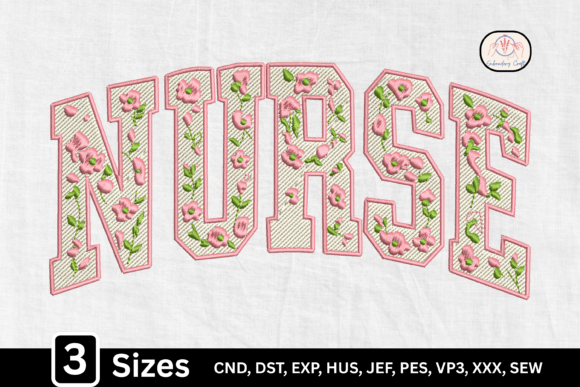
Pink Flower Medical Nurse
First Impression: Soft Strength, Not Just Sweetness
When I opened Pink Flower Medical Nurse, I didn’t see another generic “NURSE” script with petals tacked on. I saw intention: a balanced composition where bold, confident lettering anchors the design—and the pink florals don’t decorate the word, they *support* it. The layout feels grounded, not floating. There’s breathing room between stems and curves, and the floral elements lean gently into the letters without crowding them. It reads as warm but professional—exactly what healthcare workers respond to in handmade gifts or boutique merchandise. This isn’t nursery decor disguised as occupational art; it’s a machine embroidery design that respects both craft and calling.
A Real-World Test: Embroidering It on a Linen-Cotton Tote for a Local Clinic Gift Set
Last week, I stitched Pink Flower Medical Nurse onto a natural linen-cotton blend tote bag—part of a small-batch gift set for nurses at a neighborhood urgent care center. I used medium-weight cutaway stabilizer and tested thread colors first: soft rose pink for the flowers, charcoal gray for the lettering (not black—it felt too harsh against the fabric’s warmth). The result? Crisp satin stitch on the letters held beautifully, and the fill stitch in the petals had just enough texture to catch light without looking muddy. Customers who received the totes commented on how “thoughtful” and “not cutesy” it felt—a quiet win for any craft business selling personalized gifts.
Where It Shines—and Where It Needs Thought
Pink Flower Medical Nurse works especially well for:
- Custom apparel: Sweatshirts and crewneck tees—especially mid-to-heavy weight cotton blends—give the design room to breathe and hold detail.
- Tote bag design: Its horizontal footprint fits standard 4x4 or 5x7 hoops comfortably, and the floral flow complements the bag’s shape without warping.
- Embroidered patch: When stitched on twill and heat-sealed, the clean edges and moderate density make it ideal for nurse-led small shops or hospital volunteer programs.
- Baby embroidery: On organic cotton receiving blankets or onesies, tone down the pink thread slightly and reduce stitch density if your machine allows—it softens the look without losing legibility.
- Holiday embroidery: Paired with subtle green or ivory thread, it reads as gentle and heartfelt—not seasonal, but timeless—perfect for appreciation gifts in December or National Nurses Month.
But here’s where attention matters:
- Thin or stretchy fabric: On lightweight knits or jersey, skip this design unless you’re using heavy tear-away + topping. The floral fill areas can pucker without firm support.
- Curved surfaces like caps: The shape isn’t inherently cap-friendly—it’s wider than it is tall. You’ll need to resize thoughtfully or choose a smaller version if offered. Don’t force it into a 3.5" tall hoop without checking distortion.
- Dark fabric: That delicate pink thread won’t pop on navy or charcoal unless you add an underlay or switch to a slightly brighter rose. Always test contrast on scrap first.
- Frequent-wash items: Pillow covers or kitchen towels? Use high-quality polyester thread and lock stitches carefully at start/end points. Dense fill areas benefit from a light stabilizer layer underneath—even on stable fabrics.
Design Integrity Meets Commercial Reality
As someone who sells digital embroidery files and physical embroidered goods, I judge designs like Pink Flower Medical Nurse by two things: how they hold up in production, and how they land with real buyers. Visually, it avoids cliché—it doesn’t rely on hearts, crosses, or stethoscopes to signal “nurse.” That subtlety builds trust. A boutique buyer told me she chose this design over five others because it “looked like something a nurse would actually want on her coffee mug—not just tolerate.” That says everything.
It also supports brand consistency. Whether you’re an Etsy seller building a “healthcare appreciation” collection or a small shop owner curating locally made gifts, Pink Flower Medical Nurse pairs cleanly with neutral palettes, botanical prints, or minimalist packaging. It doesn’t scream—so your product story does.
Practical Designer Notes Before You Stitch
Before adding Pink Flower Medical Nurse to your next project—or listing it as part of your craft business inventory—here’s what I do every time:
- Test on scrap fabric matching your final substrate, with the same stabilizer and thread.
- Check thread color contrast in natural light—not just on screen. Pink on off-white linen looks different than on ivory cotton poplin.
- Review stitch density in your embroidery software. If fill areas look overly dense, consider reducing density by 5–8% for breathable fabrics.
- Confirm hoop size compatibility. If you only use 4x4 hoops, verify the design fits—or know how much resizing affects proportion.
- Inspect small details at 200% zoom: petal tips, serif ends, stem connections. Are they sharp? Or do they blur into running stitch filler?
- Test black-and-white mockups—it reveals balance issues no color preview will show.
- Use proper stabilizer: Cutaway for knits, tear-away for stable wovens, and always float a lightweight topping for nap-free clarity on towels or terry cloth.
- Confirm licensing before selling finished products or bundling the file. Since it’s listed under Work Occupation and Embroidery, assume personal and small commercial use is likely intended—but verify terms directly with the source.
Final Thought: A Design That Earns Its Place
Pink Flower Medical Nurse isn’t flashy. It doesn’t try to be everything. But in a crowded market of medical-themed embroidery files, it stands out by being quietly precise—thoughtful in spacing, respectful in tone, and reliable in execution. Whether you’re stitching it onto a holiday gift for a friend, prepping a batch of embroidered patches for a craft fair, or building a cohesive digital embroidery collection for Etsy sellers, this design earns its place not through novelty, but through integrity. It reminds us that the best machine embroidery design doesn’t shout—it connects. And in healthcare, connection is everything.