Sleeping Cat on Book Embroidery Design: A Craft Fair Review
First Impressions of the Design
When I first open the digital embroidery file for the Sleeping Cat on Book Embroidery Design, the immediate feeling is one of gentle warmth and storybook charm. You can almost sense the quiet afternoon light that would fall across a real tabby curled on a stack of well-loved books. The design is not loud, not overtly trendy, but it carries a soft, nostalgic quality that is incredibly marketable. For a craft fair product or a handmade product in a boutique setting, this kind of emotion is gold. It speaks directly to book lovers, cat people, and anyone who craves a little comfort in their everyday life.
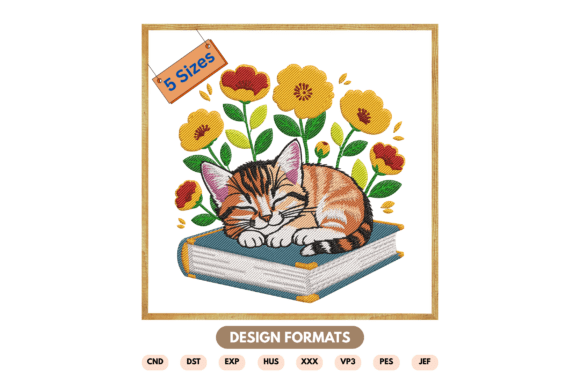
The composition, as described, features a peaceful tabby kitten, a small tower of books, and cheerful blooming flowers. That trio – cat, literature, and blooms – is a classic combination that never really goes out of style. It feels like a piece you would find in a cozy reading nook or a quiet corner of a farmhouse kitchen. The mood is soft, decorative, and slightly rustic, but with a cleanliness that can also read as modern minimalism depending on the thread colors you choose.
Appeal for the Handmade Market and Etsy Sellers
As an Etsy seller or small shop product creator, you know that designs with a literary or cozy vibe tend to perform exceptionally well in certain niches. The Sleeping Cat on Book Embroidery Design fits perfectly into the “bookish” aesthetic that has been booming across social media. Imagine this stitched on a canvas tote bag carried to the library, or on a soft tea towel draped over a kitchen hook. The emotional connection is instant. Customers don’t just see a pretty picture; they see a reflection of their own quiet moments. That kind of buyer engagement is priceless.
It also photographs beautifully. For online listings, the curved shape of the cat, the stacked books, and the scattered flowers create a natural focal point that is easy to stage. A simple linen background, a vintage book, and a cup of tea – you have a printable mockup that stops the scroll. The design’s gentle narrative means you can sell the feeling, not just the item. That is a massive advantage when you’re competing with hundreds of other machine embroidery design listings.
Product Placement: Where It Shines Brightest
Not every embroidery file works equally well on every product. Based on years of stitching for craft fairs, I would immediately place the Sleeping Cat on Book Embroidery Design as a tote bag design and a tea towel embroidery star. The horizontal or square arrangement of the cat on the books naturally suits the flat, wide surface of a kitchen towel or the front of a structured tote. It can also be stunning as an apron embroidery accent, especially on a bib apron where the design sits near the chest, creating a sweet focal point without overwhelming the garment.
For smaller items, the design could work as an embroidered patch if resized carefully. However, I would approach caps and curved surfaces with caution. The stacked books and delicate flowers might lose clarity on a strongly curved cap surface, and the horizontal orientation often fights against the vertical rise of a cap. A flat pouch, a fabric bookmark, or a small decorative pillow cover, on the other hand, would be ideal. These are all craft fair product staples that move quickly, especially when they carry such a relatable motif.
Practical Selling and Production Points
From a production standpoint, the design is easy to understand at a glance, which is crucial for impulse buys at a busy booth. A customer doesn’t need to study the piece to “get” it; the sleeping cat and books are instantly recognizable. That clarity means the finished product can be appreciated from a few feet away, pulling people toward your table.
It works especially well as a medium to large focal design. You likely won’t want to shrink it down to a tiny accent because the fine details – the cat’s little ears, the book spines, and the flower petals – need room to breathe. A larger hoop size, probably 5×7 inches or bigger, will give the digitizer the space to create clean, legible stitches. If you try to force it into a 4×4 hoop, you risk losing the charm of the flowers and making the books look like a muddy block. That’s a critical consideration for anyone planning to batch produce.
For repeatability, the design is a dream. Once you’ve dialed in your thread colors and stabilizer, you can stitch it out consistently. It doesn’t demand ten different nuanced shades; a warm orange tabby, a few muted greens, and a soft cream or yellow for the flowers will do the job beautifully. That simplicity keeps production moving and reduces thread change time, a big plus when you’re making dozens of pieces for a busy market weekend.
Careful-Use Notes and Stitch Density Considerations
No design is without its tricky spots. The Sleeping Cat on Book Embroidery Design, with its peaceful kitten and floral details, will have areas that require careful attention to stitch density. The cat’s body may be filled with a satin or tatami stitch, and if the density is too high on a lightweight fabric, you’ll get puckering. On the other hand, too few stitches and the fur will look sparse. Always test on a scrap of the exact fabric you plan to use, especially if you’re working with textured towels or loosely woven linens.
The flowers surrounding the books are likely to include small, delicate elements. Tiny petals can be a nightmare on thick, textured surfaces like terry cloth tea towels. If you’re stitching on a towel, use a water-soluble topping to keep those fine details from sinking into the pile. The same goes for the cat’s whiskers or any tiny lettering if there is a book title – I can’t see the exact file so I can’t confirm, but if the design includes small text, be prepared to enlarge it or switch to a simpler font. Small lettering that looks crisp on a digital screen often blurs into illegibility under the needle, especially on dark fabric where contrast is already a challenge.
Dark fabric is a whole other conversation. The cozy mood of this design might tempt you to stitch it on a deep navy or charcoal tote, but the tabby’s stripes and the book details will vanish if the thread colors aren’t chosen with care. Always test your thread contrast on a swatch before committing to a full run. A slightly lighter, warmer brown for the books or a brighter flower hue can save the design from becoming a dark, indistinct oval.
Visual Appeal and Booth Display Strength
When you set up your craft fair table, certain products act as anchors – the pieces that draw a customer’s eye from across the aisle. The Sleeping Cat on Book Embroidery Design has the potential to be one of those anchors if you use it on a large, visible item like a roomy market bag or a prominently displayed pillow cover. The design’s soft, rounded shapes and floral accents create a soothing visual rhythm that is very easy to look at. It’s not aggressive or loud, so it invites people to step closer. Once they’re in front of your booth, the emotional storytelling takes over.
I’d recommend pairing the embroidered pieces with a few unstaged design assets – maybe a printed catalog or a small screen showing the digital mockup – so customers can see how it would look on other products they might custom order. This works especially well if you also sell the digital embroidery file or offer custom stitching. The design’s aesthetic is cohesive enough that it can become a signature piece for your brand, adding a sense of handmade quality and consistency across different product lines.
Practical Embroidery Designer Notes
Before you go into production, a few technical checks will save you a lot of frustration. First, test the design on the exact fabric you’ll use at the craft fair. Fabric texture matters enormously. A tightly woven cotton twill for a tote bag will take the stitches differently than a loose-weave linen. I always keep a stack of scrap fabric in various colors just for this purpose. Run one full stitch-out, examine the back for any thread nests or tension issues, and adjust your stabilizer accordingly. For something like a tote, a medium-weight cutaway stabilizer is usually my go-to. For a tea towel, a no-show mesh with a temporary adhesive spray keeps everything smooth without stiffening the fabric.
Next, confirm the hoop size required. The description didn’t give exact dimensions, so check the seller’s listing carefully. You don’t want to discover that the design needs a 6×10 hoop when you only have 5×7. Also, look at the thread colors suggested. Even if you deviate, understanding the original palette will help you maintain the soft, warm mood. If no thread chart is provided, a quick photograph of the stitched sample next to your spools will give you a good starting point.
Create at least one real printable mockup by photographing your sample in good natural light. This image is gold for your Etsy seller listings or social media. Show the embroidery on a product, in a setting, so people can envision it in their own lives. And always, always confirm the commercial embroidery licensing before you sell finished items. Many digital design sellers allow commercial use of physical products, but some have restrictions. The listing didn’t specify the license terms, so you must read the fine print. Don’t assume; a quick message to the designer can clear up any doubts and protect your small business.
How the Design Elevates Product Value
Beyond the technical aspects, the Sleeping Cat on Book Embroidery Design adds a layer of perceived value to any item it touches. A plain tea towel becomes a giftable keepsake. A simple tote bag transforms into a statement piece that says something about the owner’s personality. This is the kind of handmade product that people buy for themselves and then come back to purchase as gifts for friends. The combination of cats, books, and flowers is universally appealing without being overly niche, so your customer base stays broad.
For creative entrepreneurs and boutique makers, this design offers a consistent branding thread. You can build a whole collection around it – a matching set of kitchen towels, a pillow cover, and a small zipper pouch all featuring the same sleepy cat. That kind of curation makes your booth or online shop feel intentional and premium. Customers are more likely to buy multiple items when they see a coherent story, and the narrative here is strong and comforting.
Final Considerations for Craft Fair Success
As I prepare my own booth samples, I see the Sleeping Cat on Book Embroidery Design as a reliable, heartwarming seller. It’s not a flashy trend piece that will feel dated next season; it’s a quiet classic that appeals to the growing audience of readers and cat lovers. I’ll stitch it on a natural linen tea towel first, use a soft tabby orange with a muted green for the leaves, and pair it with a cream thread for the flowers. That combination will catch the light beautifully and photograph like a dream.
If you’re a digital embroidery file seller, this design is also a strong candidate for your portfolio. The emotional appeal and the manageable palette make it attractive to beginner stitchers and experienced embroiderers alike. Just remember to provide clear guidance on hoop size, stitch count, and recommended stabilizer to reduce customer questions and returns.
In the end, the Sleeping Cat on Book Embroidery Design isn’t just a cute picture – it’s a versatile, emotionally intelligent asset that can elevate your craft fair product lineup. Take the time to test it, stage it thoughtfully, and let its quiet charm do the selling. You’ll likely find that customers pause, smile, and reach for their wallets before they even ask the price. And that, right there, is the mark of a truly great machine embroidery design for the handmade market.